South African pig farmers typically sell through four main channels: registered abattoirs (best for consistent volume and formal pricing), independent butchers and informal traders (fastest payment, most flexible on volume), live pig auctions or direct sales to other farmers (mainly for breeding stock or weaners), and direct-to-consumer sales (highest margin, most time-intensive). Most successful small-scale farmers use a mix of two or three channels rather than relying on just one, since each has different volume requirements, payment speed, and price ceilings.
Choosing the right sales channel, or combination of channels, has a bigger impact on your margins than almost any other decision after your initial setup, because pricing can vary substantially between channels for the exact same pig.
Channel 1: Registered Abattoirs
How it works: You deliver live pigs at agreed market weight (typically 90–100kg), the abattoir slaughters and grades the carcass, and you’re paid based on carcass weight and grade.
Pros:
- Consistent, predictable demand if you can supply reliably
- Formal pricing based on grading, which rewards well-managed, well-fed pigs
- Required if you want your pork to reach formal retail channels (supermarkets, larger butchers)
Cons:
- Requires DALRRD registration and movement permits
- Payment terms are sometimes slower than informal sales (days to weeks rather than immediate cash)
- Smaller producers may get lower priority or less favourable terms than established commercial suppliers
Best for: Semi-commercial and commercial farmers with consistent monthly volume to offer.
Channel 2: Independent Butchers and Informal Traders
How it works: You sell live pigs or, in some cases, already-slaughtered carcasses (via a registered abattoir) directly to local butchers or informal meat traders.
Pros:
- Faster payment, often cash or immediate EFT
- More flexible on volume — useful for smaller batches that wouldn’t interest a formal abattoir
- Easier entry point for new farmers without an established abattoir relationship
Cons:
- Prices are more negotiable (and variable) than formal channels — you need to know your numbers to avoid underselling
- Relationship-dependent — a single buyer disappearing can leave you scrambling for a new outlet
Best for: Backyard and small-scale farmers, especially in the early stages before formal buyer relationships are established.
Channel 3: Live Auctions and Farmer-to-Farmer Sales
How it works: Selling breeding stock, weaners, or live finished pigs directly to other farmers, either through informal networks or organised livestock auctions.
Pros:
- Good channel specifically for breeding stock and weaners, which formal abattoirs don’t buy
- Can command a premium for verified healthy, well-bred stock
- Useful for building a reputation and repeat buyer relationships in your local farming community
Cons:
- Less relevant if your focus is finished market-weight pigs for meat, rather than breeding stock
- Requires some reputation or track record to command premium prices
Best for: Farmers breeding and selling weaners or breeding stock, rather than solely finishing pigs for slaughter.
Channel 4: Direct-to-Consumer Sales
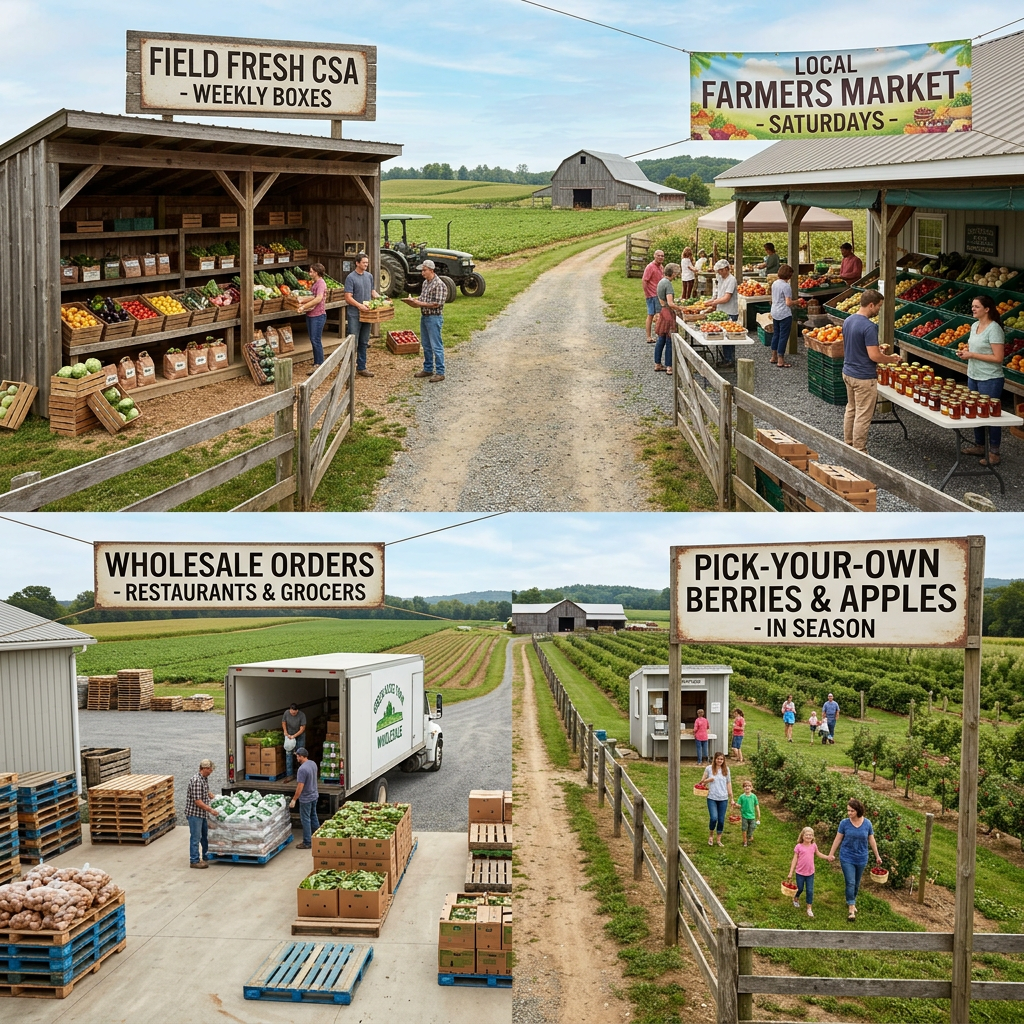
How it works: Selling pork directly to households, restaurants, or via farmers’ markets — typically pre-packaged cuts rather than live animals, since consumers buy meat, not livestock.
Pros:
- Highest margin per kilogram by a significant margin, since you capture retail-level pricing instead of wholesale/live pricing
- Builds a loyal customer base and brand reputation, valuable for long-term growth
- Works well combined with a free-range or heritage-breed angle, which commands a further premium
Cons:
- Most time- and labour-intensive channel — requires marketing, order management, and often delivery logistics
- Still requires abattoir slaughter for any commercial retail sale (see the permits and licensing guide for details)
- Doesn’t scale as easily as bulk channels — good as a complement to, not a replacement for, volume sales
Best for: Farmers with time to invest in marketing and customer relationships, particularly those targeting a premium/free-range niche.
Realistic Pricing Guidance
Pricing varies by region, season, pig grade, and channel, and shifts with feed costs and broader market conditions, so treat the ranges below as a starting reference point to benchmark against, not a fixed number.
| Channel | Typical Pricing Basis | Relative Price Level |
| Registered abattoir | Per kg carcass weight, graded | Baseline/wholesale |
| Independent butcher/trader | Per live kg or per head, negotiated | Baseline to slightly above |
| Live auction/farmer sale (weaners/breeding stock) | Per head, based on breed and health record | Varies widely — premium for verified stock |
| Direct-to-consumer (packaged pork) | Per kg retail cuts | Significantly above wholesale (often 1.5–2x+) |
Always check current pricing with your local abattoir, farmers’ association, or provincial department of agriculture market reports before committing to a channel, pork pricing moves with feed costs, seasonal demand (spikes around holidays), and broader supply conditions, so numbers from even a year ago can be meaningfully out of date.
How to Choose Your Channel Mix
Ask three questions:
- What’s my volume? Small, irregular batches suit informal/butcher sales better than trying to secure an abattoir contract. Consistent monthly volume opens up formal abattoir relationships.
- How much time can I invest in sales? Direct-to-consumer has the best margins but demands the most ongoing time — realistic only if you (or someone on the farm) can dedicate hours weekly to marketing and order fulfilment.
- What’s my product? Standard commercial-breed pork competes best through abattoir/wholesale channels on price. Free-range, heritage-breed, or specialty pork earns its premium through direct-to-consumer or niche butcher relationships.
A common, low-risk approach for new farmers: start with informal butcher/trader sales for early cash flow, and layer in a direct-to-consumer offering or abattoir relationship as your volume and reputation grow.
FAQ
What is the best place to sell pigs in South Africa as a small farmer? Independent butchers and informal traders are usually the easiest entry point for new small-scale farmers, offering faster payment and more flexibility on volume than formal abattoir contracts.
Do I need special registration to sell pigs? Yes. Selling commercially requires DALRRD premises registration, and moving pigs requires the appropriate movement permits — see our permits and licensing guide for the full breakdown.
How much more can I earn selling direct-to-consumer versus wholesale? Direct-to-consumer pork sales often earn 1.5–2x or more per kilogram compared to wholesale/abattoir pricing, but require significantly more time investment in marketing, packaging, and order fulfilment.
Can I sell live pigs without going through an abattoir? Yes, for breeding stock, weaners, or live sales to other farmers — but any pork intended for retail sale as meat must go through a registered abattoir under the Meat Safety Act.
Where can I find current pig and pork prices in South Africa? Check with your local abattoir, provincial department of agriculture market reports, or regional farmers’ associations, since prices shift with feed costs and seasonal demand.


Leave a Reply