
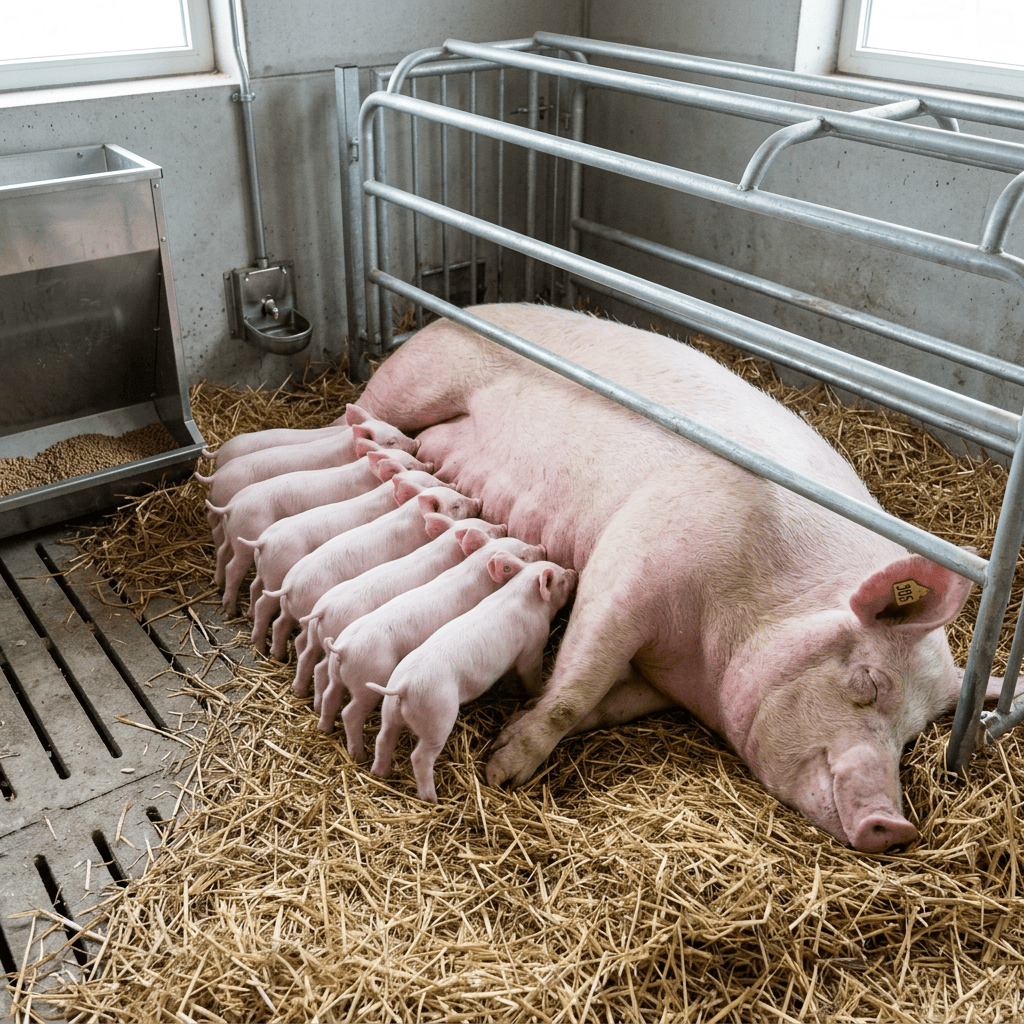
The biggest drivers of piglet mortality are crushing by the sow in the first 72 hours, chilling due to inadequate farrowing temperature control, and low birth weight from poor sow nutrition during pregnancy. On well-managed small farms, pre-weaning mortality should sit around 10–15%; anything consistently above 20% signals a specific, fixable problem in farrowing management rather than “bad luck.” Weaning age also matters — weaning too early (before 3 weeks) significantly increases piglet stress and post-weaning mortality risk.
Piglet mortality is where most of the profit leakage happens in small-scale pig farming, because losses here compound: every piglet lost before weaning is a total loss of the feed, time, and breeding investment already made in that litter. The good news is that most causes are manageable with routine, low-cost changes rather than expensive equipment.
The Main Causes of Piglet Mortality (and How to Address Each)
1. Crushing by the Sow
The single biggest cause of pre-weaning mortality, particularly in the first 3 days after birth when piglets are weakest and least mobile.
What helps:
- Farrowing rails or a farrowing crate that limits the sow’s ability to lie down suddenly on piglets — even a simple rail fixed 20–25cm from the pen wall, at piglet height, gives piglets an escape zone
- A heat lamp or warm creep area positioned away from the sow encourages piglets to rest apart from her rather than pressing against her body for warmth (which increases crushing risk)
- Closer supervision during the first 48–72 hours after farrowing, when the risk is highest
2. Chilling
Newborn piglets have very limited ability to regulate their own body temperature and are highly vulnerable to cold stress, especially in the first week.
What helps:
- Maintain a creep area at 30–32°C for the first week, dropping gradually over subsequent weeks
- Use dry, draft-free bedding in the farrowing area
- Time farrowing to avoid the coldest months where possible, or invest in supplementary heating (heat lamps or heat mats) during winter farrowing
Chilled piglets often stop nursing effectively, which compounds into low birth-to-weaning growth even if they survive — this is a bigger hidden cost than the direct mortality figure suggests.
3. Low Birth Weight
Underweight piglets (under ~1kg at birth) have significantly lower survival odds, largely because they struggle to compete for teat access and are more vulnerable to chilling.
What helps:
- Ensure sows receive adequate nutrition — particularly protein and energy — in the final third of pregnancy, when most foetal growth happens
- Avoid overcrowding sows during pregnancy, since stress and competition for feed reduce individual intake
- Consider split-suckling for large litters with a wide weight range — temporarily separating the strongest piglets for a few hours after birth gives smaller piglets uncontested access to the sow’s first colostrum
4. Insufficient Colostrum Intake
Piglets are born with essentially no immune protection of their own and depend entirely on colostrum (the sow’s first milk) for early immunity.
What helps:
- Ensure every piglet nurses within the first 6 hours of birth — this window matters more than total colostrum volume
- For large litters (12+ piglets) with fewer functional teats than piglets, consider fostering surplus piglets onto another sow that farrowed around the same time, if you have more than one sow farrowing close together
5. Disease and Scours (Diarrhoea)
Common in piglets, often linked to poor hygiene in the farrowing area or sudden dietary changes.
What helps:
- Disinfect farrowing pens thoroughly between litters
- Keep bedding dry — wet, soiled bedding is a major driver of scours
- Introduce creep feed gradually from around 10–14 days rather than switching diets abruptly
Weaning: Getting the Timing Right
| Weaning age has a direct, measurable effect on post-weaning piglet survival and growth.Weaning Age | Outcome |
| Under 3 weeks | Higher stress, weaker immune transition, increased post-weaning mortality risk |
| 3–4 weeks | Common on small/medium farms — reasonable balance of sow recovery time and piglet readiness |
| 5–6 weeks | Better piglet weaning weight and resilience, but ties up the sow for longer, reducing her annual litter output |
more forgiving choice — it gives piglets more time to develop a functional digestive system for solid feed, which reduces the post-weaning growth dip that’s common when piglets are weaned too young.
Reducing Post-Weaning Stress
The move from the sow’s milk to solid feed, combined with a new pen environment, is one of the most stressful transitions in a pig’s life, and it’s a common point for growth setbacks and illness.
- Introduce creep feed at least 1–2 weeks before weaning, so piglets are already familiar with solid food when the sow is removed
- Avoid mixing piglets from different litters immediately at weaning if possible — fighting to establish a new pecking order adds further stress at an already vulnerable time
- Keep the weaning pen environment consistent with what piglets are used to (similar temperature, familiar bedding type) to reduce the number of changes happening at once
A Simple Farrowing-to-Weaning Checklist
| Stage | Key Action |
| Final third of pregnancy | Increase sow nutrition, avoid overcrowding |
| Farrowing (day 0) | Supervise closely, ensure early colostrum intake |
| Days 0–3 | Highest crushing risk — use farrowing rails, maintain creep warmth |
| Days 10–14 | Introduce creep feed gradually |
| Weaning (weeks 3–6) | Choose age based on facilities; wean gradually where possible |
| Post-weaning | Maintain consistent environment, monitor for scours and stress |
FAQ
What is a normal piglet mortality rate for a small farm? A pre-weaning mortality rate of 10–15% is typical for a well-managed small-scale operation. Rates consistently above 20% point to a specific, fixable issue, usually related to crushing, chilling, or sow nutrition.
What is the best age to wean piglets? Most small-scale farms wean between 3 and 6 weeks. Weaning under 3 weeks significantly increases post-weaning mortality risk, while weaning at 4–5 weeks tends to offer a good balance of piglet readiness and sow recovery time.
What is the leading cause of piglet death? Crushing by the sow, particularly within the first 72 hours after farrowing, is the single largest cause of pre-weaning mortality on most farms.
How can I reduce crushing deaths without buying a farrowing crate? A simple farrowing rail fixed 20–25cm from the pen wall, combined with a warm creep area away from the sow to draw piglets away from her body, significantly reduces crushing risk at low cost.
Why is colostrum so important for piglets? Piglets are born with almost no natural immunity and depend entirely on colostrum from the sow’s first milk for early disease protection. Ensuring every piglet nurses within the first 6 hours of birth is critical for survival.


Leave a Reply