Mixing quality feed means combining the right ingredients, in the right proportions, using clean and properly sized particles, so that every pig receives a consistent, balanced diet. Feed typically accounts for 60–70% of total production costs on a pig farm, which means how well that feed is formulated and mixed has a direct, outsized effect on growth rate, health, and overall profitability.
This guide walks through the ingredients, ratios, and mixing steps that separate a genuinely balanced feed from a mix that looks complete but underperforms.
Why Feed Quality and Mixing Accuracy Matter
- Growth performance. Pigs fed an inconsistent or poorly balanced mix show slower weight gain and less predictable finishing weights.
- Health outcomes. Nutrient deficiencies weaken immune response, making pigs more susceptible to disease even when biosecurity is strong.
- Cost control. Overfeeding expensive ingredients — or wasting feed through poor mixing — erodes margins quickly.
Key Ingredients in a Balanced Pig Feed Mix
Energy Sources
Corn, wheat, sorghum, or barley typically form the largest share of the mix, supplying the calories pigs need for growth and daily activity.
Protein Sources
Soybean meal is the most common protein source, often supplemented with fishmeal, canola meal, or synthetic amino acids like lysine to meet exact requirements at lower cost.
Vitamins and Minerals
A premix supplying calcium, phosphorus, salt, and vitamins A, D, E, and B-complex is essential — these are needed in small amounts but their absence causes outsized health problems.
Fiber
Ingredients like wheat bran or beet pulp support digestive health, particularly in sows and older pigs.
Feed Requirements by Pig Life Stage
- Piglets / starter feed: Higher protein and highly digestible ingredients to support rapid early growth.
- Grower feed: Balanced energy and protein to build lean muscle efficiently.
- Finisher feed: Slightly reduced protein, higher energy focus to finish pigs to market weight.
- Sow / breeding feed: Adjusted calcium, phosphorus, and fiber to support reproduction and milk production.
Steps to Mixing Quality Feed on the Farm
- Source clean ingredients. Reject grain that is moldy, damp, or contaminated with foreign material before it ever reaches the mixer.
- Follow an accurate formulation. Use a ration formulated (ideally with a nutritionist’s input) for the specific life stage being fed — guessing ratios leads to inconsistent results.
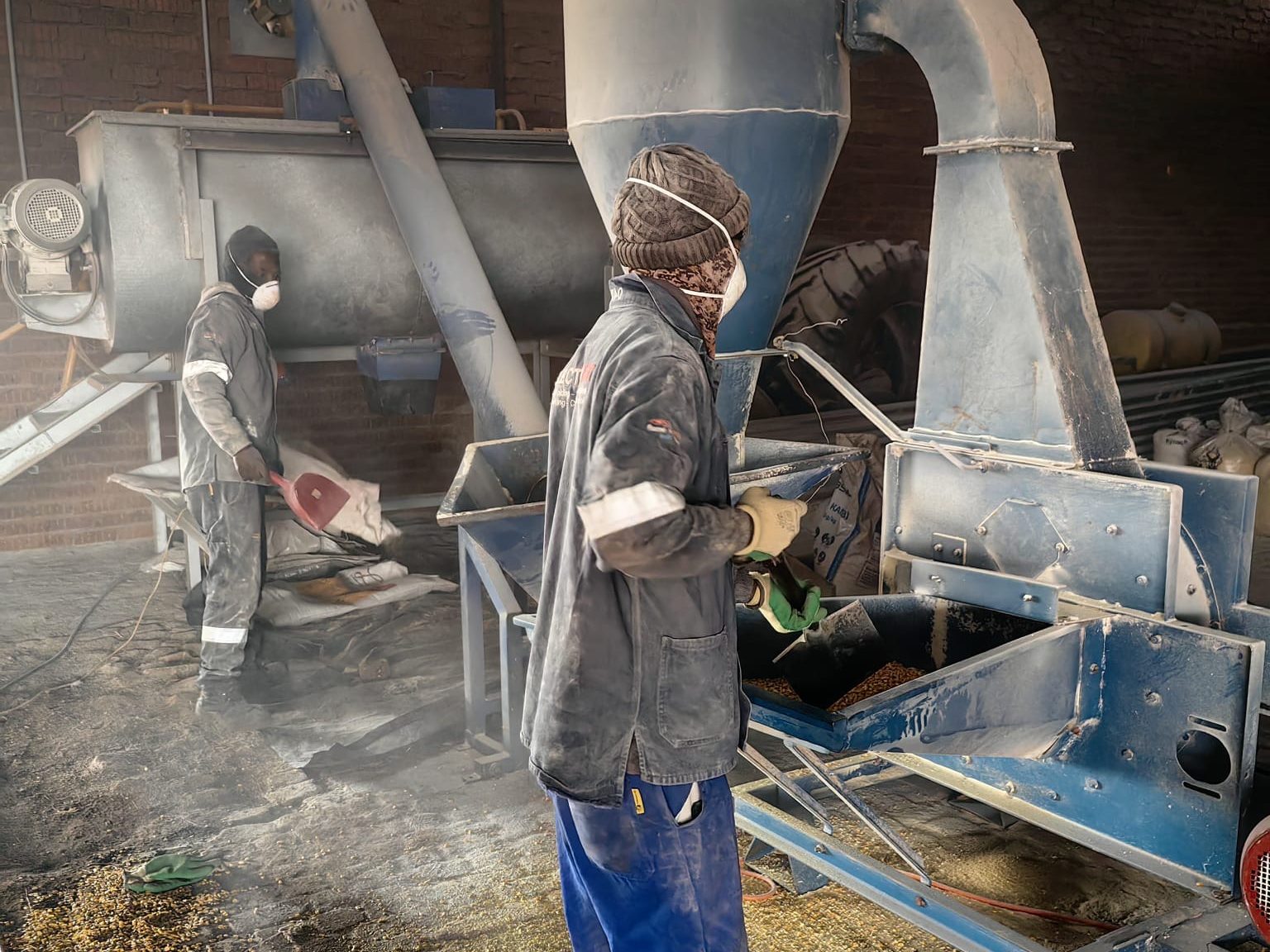
- Grind to the correct particle size. Particles that are too coarse reduce digestibility; particles ground too fine increase the risk of stomach ulcers.
- Mix for the full recommended time. Under-mixing leaves nutrients unevenly distributed, so some pigs get too much of an ingredient and others too little.
- Store feed correctly. Keep finished feed dry, cool, and pest-free — mold and rancidity can develop within days in poor storage conditions.
Common Feed Mixing Mistakes
- Eyeballing ratios instead of weighing ingredients. Small measurement errors compound across a full batch.
- Ignoring mixer maintenance. Worn paddles or belts cause uneven mixing even when ingredients and ratios are correct.
- Skipping the premix. Vitamins and minerals are easy to omit but cause the most severe long-term health issues when missing.
- Not adjusting for ingredient changes. Swapping corn for a different grain source without recalculating the ration changes the nutrient profile of the whole batch.
Signs Your Feed Mix Needs Adjustment
- Uneven growth rates within the same batch of pigs
- Increased instances of diarrhea or digestive upset
- Pigs sorting or refusing parts of the feed
- Feed conversion ratio trending worse over several cycles
Frequently Asked Questions
How do I know if my pig feed mix is balanced?
A balanced mix meets the energy, protein, vitamin, and mineral requirements for the specific life stage being fed. The most reliable way to confirm this is a feed analysis or a formulation reviewed by a livestock nutritionist, combined with tracking growth rate and feed conversion over time.
Can I mix pig feed at home or on the farm?
Yes, many farms mix their own feed using a formulated ration, a grinder, and a mixer. Doing so successfully requires accurate ingredient sourcing, a reliable scale, and a mixing routine that’s followed consistently.
How often should feed formulas be adjusted?
Formulas should be reviewed whenever pigs move between life stages, when ingredient sources change, or roughly every few months to account for shifts in ingredient quality or cost.
What happens if pig feed is poorly mixed?
Poorly mixed feed leads to inconsistent nutrient intake across the herd, which shows up as uneven growth, higher feed costs per kilogram of gain, and increased susceptibility to illness.
 NagaPorkProducers
Leave a comment