The most effective way to feed pigs on a budget is to use commercial feed for the stages where nutrition matters most, weaning and early growth, while supplementing grower and finisher stages with cheaper bulk sources like brewer’s grain, vegetable by-products, and surplus produce. Feed typically makes up 60–70% of total pig farming costs, so even small, safe adjustments here have an outsized impact on your bottom line.
The mistake most beginners make is either paying full commercial feed prices the entire way through (unsustainable for a small operation) or cutting corners on nutrition too early (which stunts growth and actually costs more per kilogram of pork produced). The goal is a middle path: full nutrition when it matters most, smart supplementation when it doesn’t.
Understand Where Your Feed Budget Actually Goes
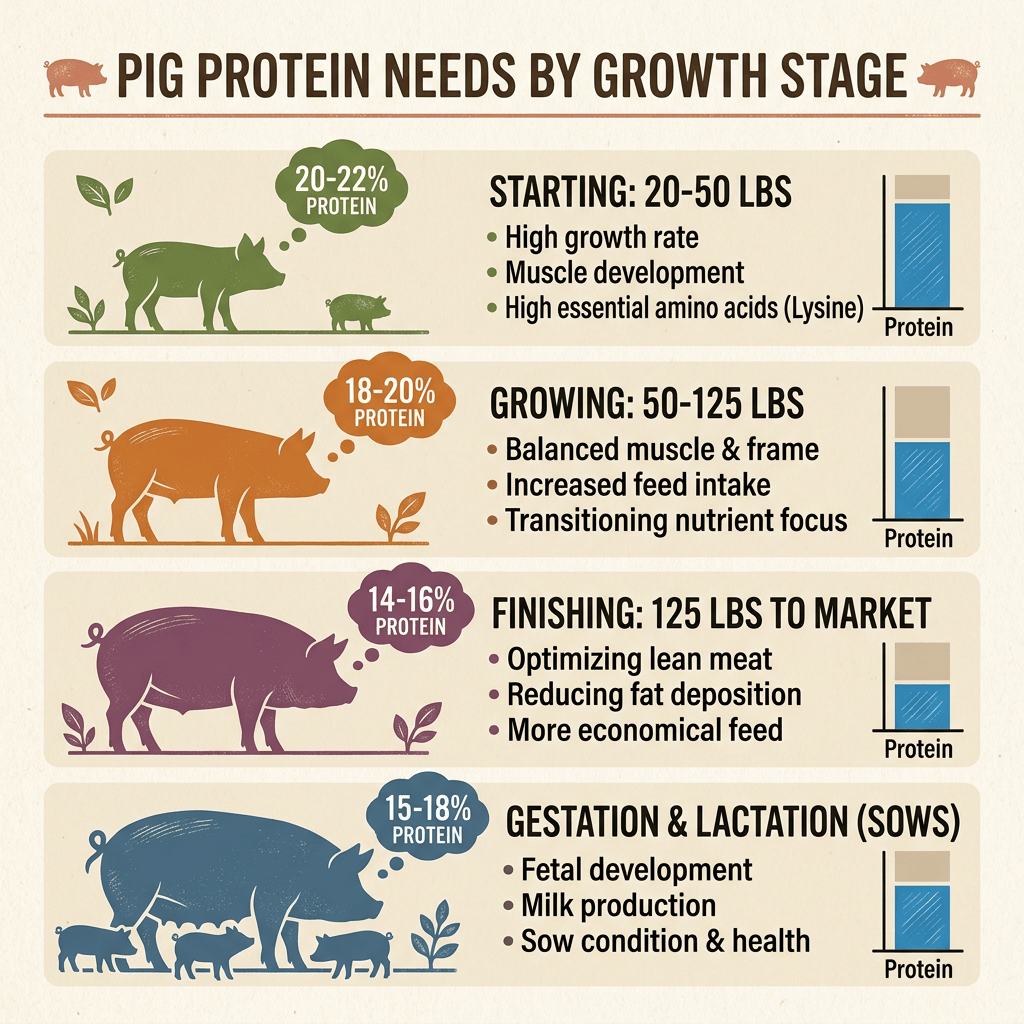
Pigs need different protein levels at each growth stage:
• Weaners (8–10 weeks): ~18–20% protein — do not cut corners here
• Growers (10–20 weeks): ~16% protein — some supplementation is workable
• Finishers (20 weeks+): ~14% protein — the stage with the most room for cost-cutting
Because weaners are small and eat relatively little in absolute terms, spending on premium starter feed here is cheap insurance. The real savings opportunity is in the grower and finisher stages, where pigs eat far more total volume.
Low-Cost Feed Sources Worth Considering
Brewer’s grain (spent grain from breweries): A high-fibre, moderate-protein by-product often available cheaply or free from local breweries. Works well as a partial substitute (up to 20–30% of the diet) in grower and finisher rations.
Vegetable and fruit by-products: Surplus or reject produce from markets, greengrocers, or your own garden can supplement diets, but should never make up more than 15–20% of intake, since it’s low in protein and can cause digestive upset in large quantities.
Maize by-products (bran, husks): Cheap and widely available in South Africa, useful as an energy source, but low in protein — must be balanced with a protein source.
Whey (from dairy/cheese production): A good protein and energy source where available locally, commonly used by farmers near dairies.
Kitchen scraps: Can supplement finisher-stage diets in small quantities, but must be cooked/boiled first where required by local regulation, and should never include meat products, due to disease transmission risk (this is a legal requirement in many regions, not just a recommendation)
What NOT to Cut Corners On
• Weaner nutrition: Underfeeding protein at this stage causes permanent growth stunting that no amount of later feeding fully corrects.
• Clean water access: Pigs need constant access to clean water — restricting water to “save costs” reduces feed intake and growth far more than it saves.
• Mineral and vitamin supplementation: Bulk/scrap feed sources are often deficient in key minerals (especially calcium, phosphorus, and salt) — a basic mineral premix is a small cost relative to the growth problems a deficiency causes.
A Practical Budget Feeding Plan
| Growth Stage | Commercial Feed % | Supplemented % | Notes |
| Weaner (8–10 wks) | 90–100% | 0–10% | Protect this stage — minimal cutting |
| Grower (10–20 wks) | 60–70% | 30–40% | Brewer’s grain, maize by-products, mineral premix |
| Finisher (20 wks+) | 40–50% | 50–60% | Highest room for cost-cutting, watch growth rate closely |
FAQ
What percentage of pig farming costs is feed? Feed typically accounts for 60–70% of total operating costs in small-scale pig farming, making it the single biggest lever for improving profitability.
Can pigs eat kitchen scraps? In small quantities during the finisher stage, yes — but scraps should never include meat products in most regions due to disease transmission risk, and should be a minority of the overall diet, not a replacement for balanced feed.
Is it safe to feed pigs brewer’s grain? Yes, brewer’s grain is a widely used, safe supplement for growing and finishing pigs, typically making up 20–30% of the diet without nutritional problems, provided it’s fresh and stored properly to avoid mould.
Does cheaper feed always save money? Not necessarily. If cheaper feed slows growth rates, the pig takes longer to reach market weight, which can increase total feed, labour, and housing costs — track feed conversion ratio, not just the price per bag.
At what growth stage can I start cutting feed costs? The finisher stage (20 weeks onward) has the most room for cost-cutting through supplementation. Weaner-stage nutrition (8–10 weeks) should not be compromised, since it affects lifetime growth potential.


Leave a Reply